
I trust KJV, Webster, ASV
I do not trust living Bible, niv, nkjv, esv, cev, message, passion translation, etc etc
This is a tiny article of the reasoning behind my writing and thoughts.
The multiple numbers of modern Bible translations like the NIV and ESV, passion translation, message, cev nasv, living Bible and more , has led to great confusion among believers, especially new members of the church who need a solid foundation in God’s unchanging Word.
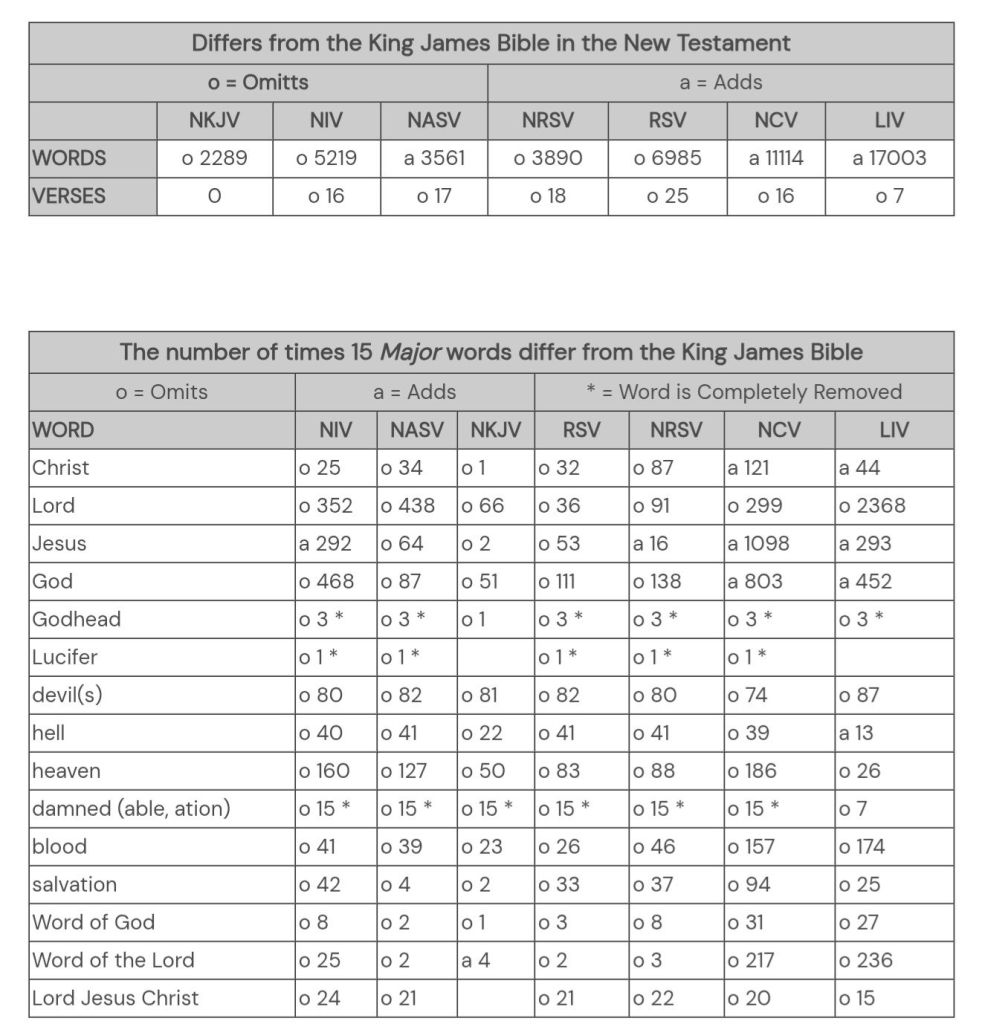
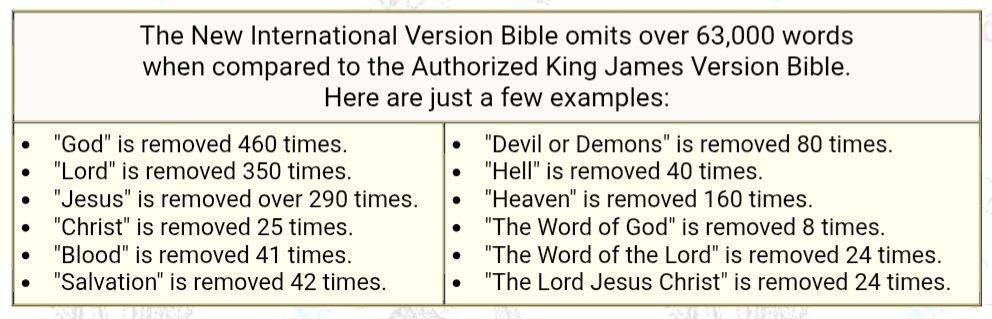
Reports document over 35,000, to 65,000 word changes across various modern versions, with the NIV alone showing more than 6,653 alterations compared to the trusted KJV, creating a flood of differences that distort core doctrines for vulnerable readers.
These shifts are not minor updates for clarity but substantive rewritings that weaken teachings on Christ, salvation, and the Holy Spirit, leaving new converts in Christ and older members eager for truth, at risk of building their faith on sand rather than rock.
I myself have spent literally, physically over 14,000 hours studying this single subject and reading all of these versions multiple times through and as well, other scholars and learned men have pored over these texts, revealing thousands of additions, deletions, and substitutions that strike at the heart of Scripture’s reliability, with the NIV containing 64,094 fewer words than the KJV and drastically reducing key terms like “Christ” (omitted or altered 25 times), “blood” (41 times), and “salvation” (42 times).
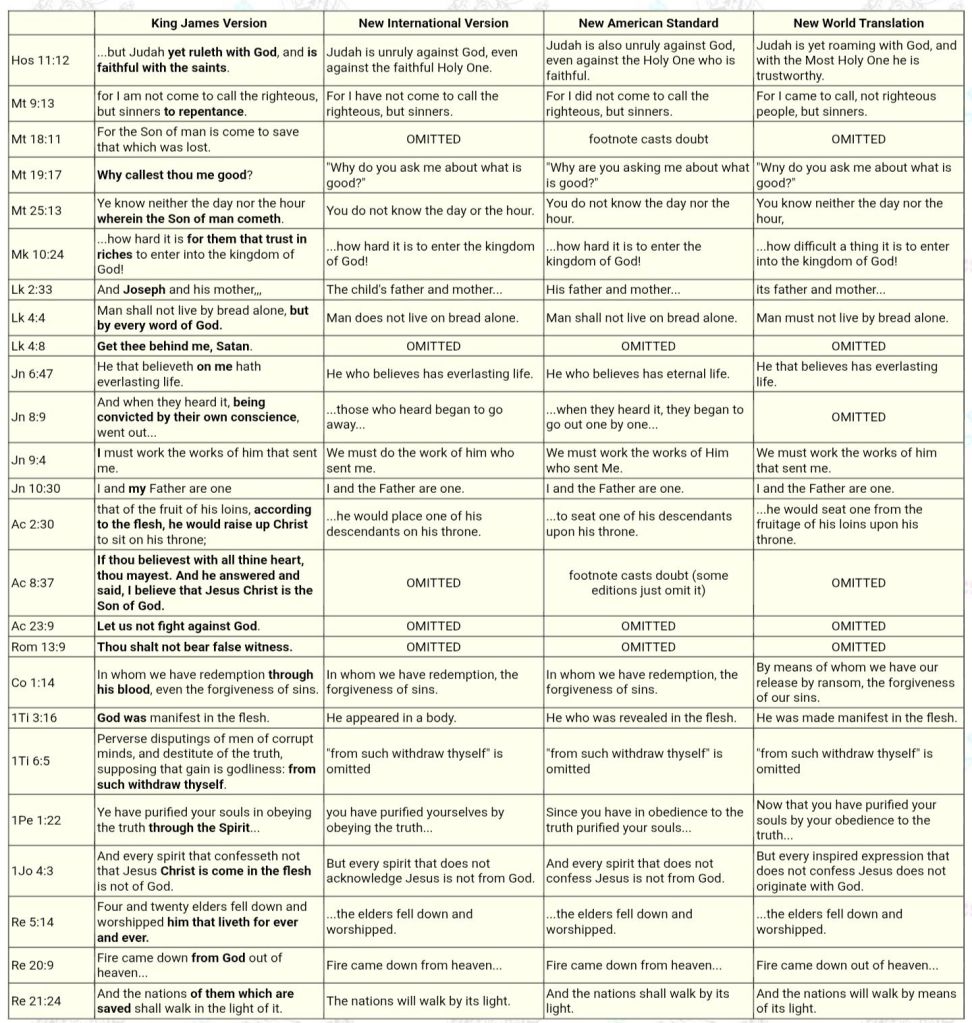
The ESV compounds this by questioning the authenticity of over 200 verses found faithfully in the KJV, relegating them to footnotes or brackets, which plants seeds of doubt about what truly belongs in God’s inspired text.
Such extensive tampering is equivalent in scope to erasing entire books like the Gospel of John multiple times over, erodes confidence in the Bible as the preserved, inerrant Word, particularly for those new to the faith who cannot yet discern these subtle attacks on orthodoxy.
Take the NIV’s handling of gender language, for instance, where it replaces precise terms like “brothers” with inclusive “brothers and sisters” even in contexts addressing men specifically, injecting contemporary cultural agendas that blur biblical distinctions on gender roles, leadership, and authority.
This was so egregious that even conservative groups like the Council on Biblical Manhood and Womanhood publicly rejected the NIV 2011 edition, charging it with promoting progressive reinterpretations foreign to the original manuscripts. For a new believer studying passages on church order or family structure, these twists foster confusion, diluting commands that God intended with razor sharp clarity and leading souls toward compromise rather than conviction.
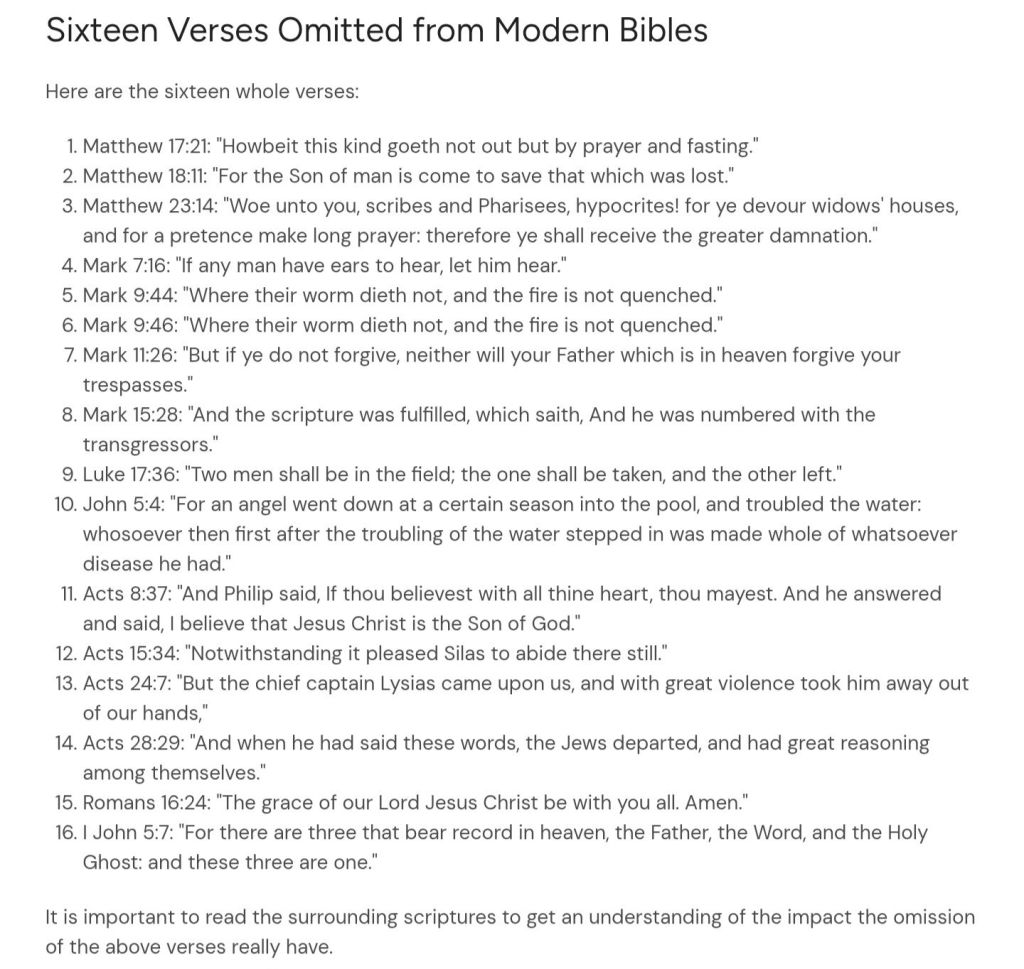
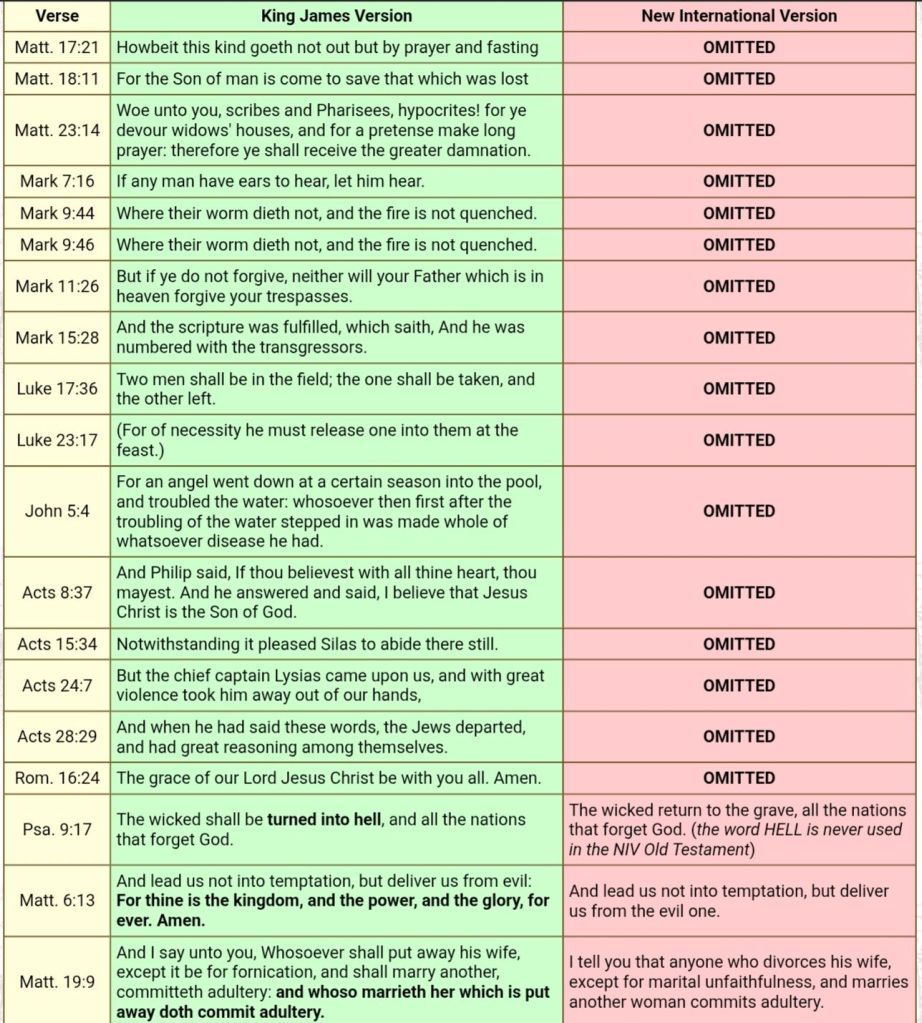
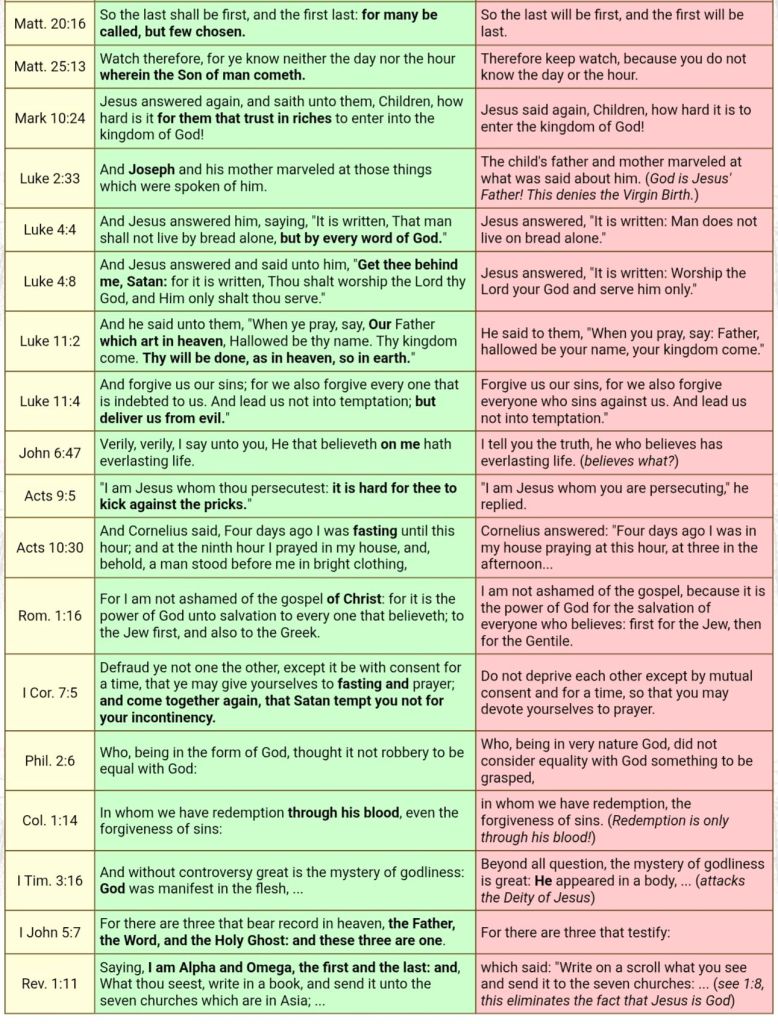
The ESV fares no better despite its claim to “essentially literal” translation; it leans on eclectic critical texts that excise verses present in the KJV’s reliable Textus Receptus base, such as Matthew 17:21’s essential teaching on fasting and prayer or other passages underscoring Christ’s sovereign power and the Holy Spirit’s direct actions; By omitting these or hiding them in footnotes with qualifiers like “some manuscripts include,” the ESV implies uncertainty where the KJV affirms certainty, stripping away vital assurances and imperatives that fortify faith against spiritual warfare.
New Christians and church members, still learning to walk by faith, encounter a truncated gospel in these versions, one that mutes the full force of divine intentions and leaves them spiritually undernourished, prone to doubt when trials arise. The sheer volume of these 35,000 and above word changes across modern translations forms a slippery slope, bombarding readers with a textual buffet where no version stands firm, demanding constant cross checking that overwhelms beginners and sows division in churches.
In stark contrast, the KJV and its faithful revision, the Webster Bible, draw from the preserved traditional texts that have endured for centuries without the meddling of modern scholarship’s biases, delivering the full, unaltered counsel of God in majestic, time tested English. These versions avoid the “doctrinal destruction” inherent in NIV and ESV alterations, safeguarding every word, phrase, and verse as handed down through God’s providence to equip saints for every good work.
For apologetics and discipleship today, especially amid cultural storms assaulting biblical truth, the KJV’s proven track record of doctrinal purity far surpasses the fleeting readability of novelty translations that sacrifice fidelity on the altar of accessibility. New believers deserve nothing less than the unadulterated Scriptures that have converted millions and stood against every assault.
 The Quill of Samantha Grace Newcastle