Below are common C-PTSD markers, especially as they appear after long-term narcissistic or relational abuse.
1. Emotional Dysregulation
Difficulty returning to baseline after stress.
Sudden anger, irritation, or rage (often followed by shame)
Emotional numbness or shutdown
Feeling “too much” or “nothing at all”
Overwhelm from relatively small triggers
2. Persistent Hypervigilance
The nervous system stays in threat mode.
Constant scanning for danger, tone changes, or disapproval
Startle response is exaggerated
Difficulty relaxing, even in safe environments
Trouble sleeping or staying asleep
3. Negative Self-Concept
Internalized damage from chronic invalidation.
Deep shame or feeling “fundamentally flawed”
Excessive self-blame, especially around conflict
Questioning your own memory, intent, or perceptions
Feeling responsible for other people’s emotions
4. Relational Disturbances
Trauma shows up most in close relationships.
Fear of conflict or abandonment
Over-explaining, people-pleasing, or appeasement
Difficulty trusting others’ motives
Alternating between emotional distance and over-attachment
Tolerating poor treatment longer than you should
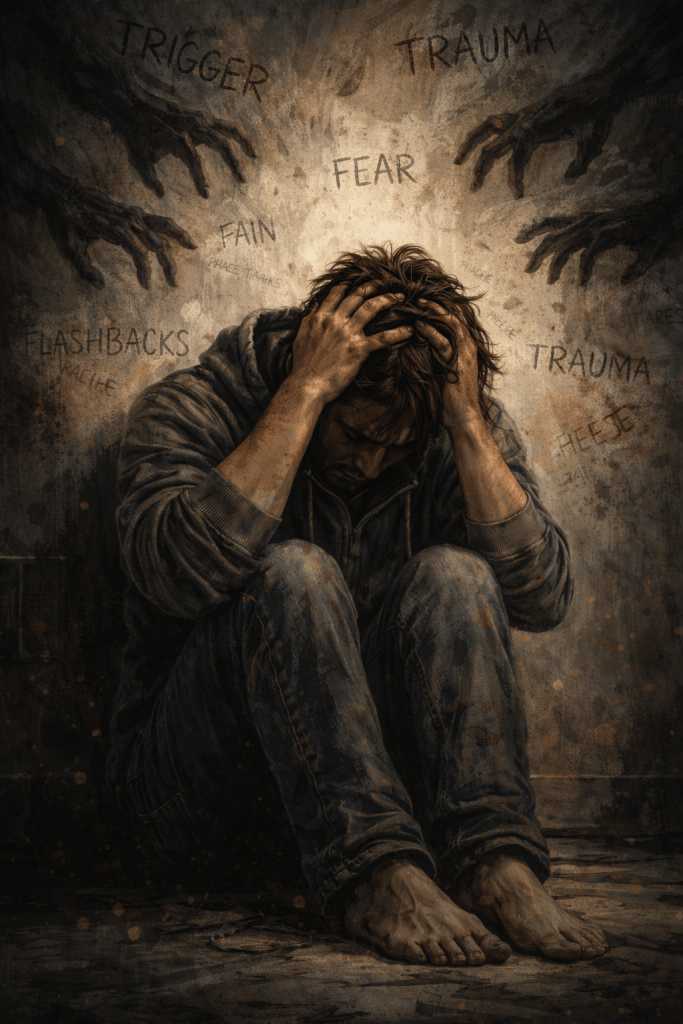
5. Trauma Triggers & Emotional Flashbacks
Reactions without clear present-day cause.
Intense reactions to tone, criticism, silence, or withdrawal
Feeling suddenly small, powerless, or trapped
Shame or panic without a visual memory attached
Strong urge to defend, explain, or withdraw
(Emotional flashbacks are especially common in narcissistic abuse survivors.)
6. Dissociation
The mind protects by disconnecting.
Feeling detached from your body or surroundings
“Spacing out” during stress or conflict
Memory gaps around emotional events
Feeling unreal or on autopilot
7. Identity Confusion
Loss of self after prolonged control or gaslighting.
Difficulty knowing what you want or feel
Second-guessing decisions
Feeling defined by the past relationship
Sense that your life was “put on hold”
8. Chronic Stress-Related Physical Symptoms
Trauma stored in the body.
Muscle tension, jaw clenching, headaches
GI issues, fatigue, unexplained pain
Autoimmune flare-ups or stress sensitivity
Feeling constantly “worn down”
9. Reactive Responses Misread as Character
Often mislabeled rather than understood.
Defensiveness or anger under pressure
Emotional outbursts followed by remorse
Avoidance of confrontation
Being described as “difficult” or “too sensitive”
These are trauma adaptations, not personality defects.
PTSD often centers on a single event
C-PTSD develops from repeated, inescapable trauma, especially in relationships
C-PTSD deeply affects self-concept and relationships, not just fear memories
Important Reframe:
What you experienced trained your nervous system to survive:
Hypervigilance kept you safe
Reactivity was a last-resort defense
Emotional numbing reduced pain
Self-doubt was learned through gaslighting
 The Quill of Samantha Grace Newcastle